
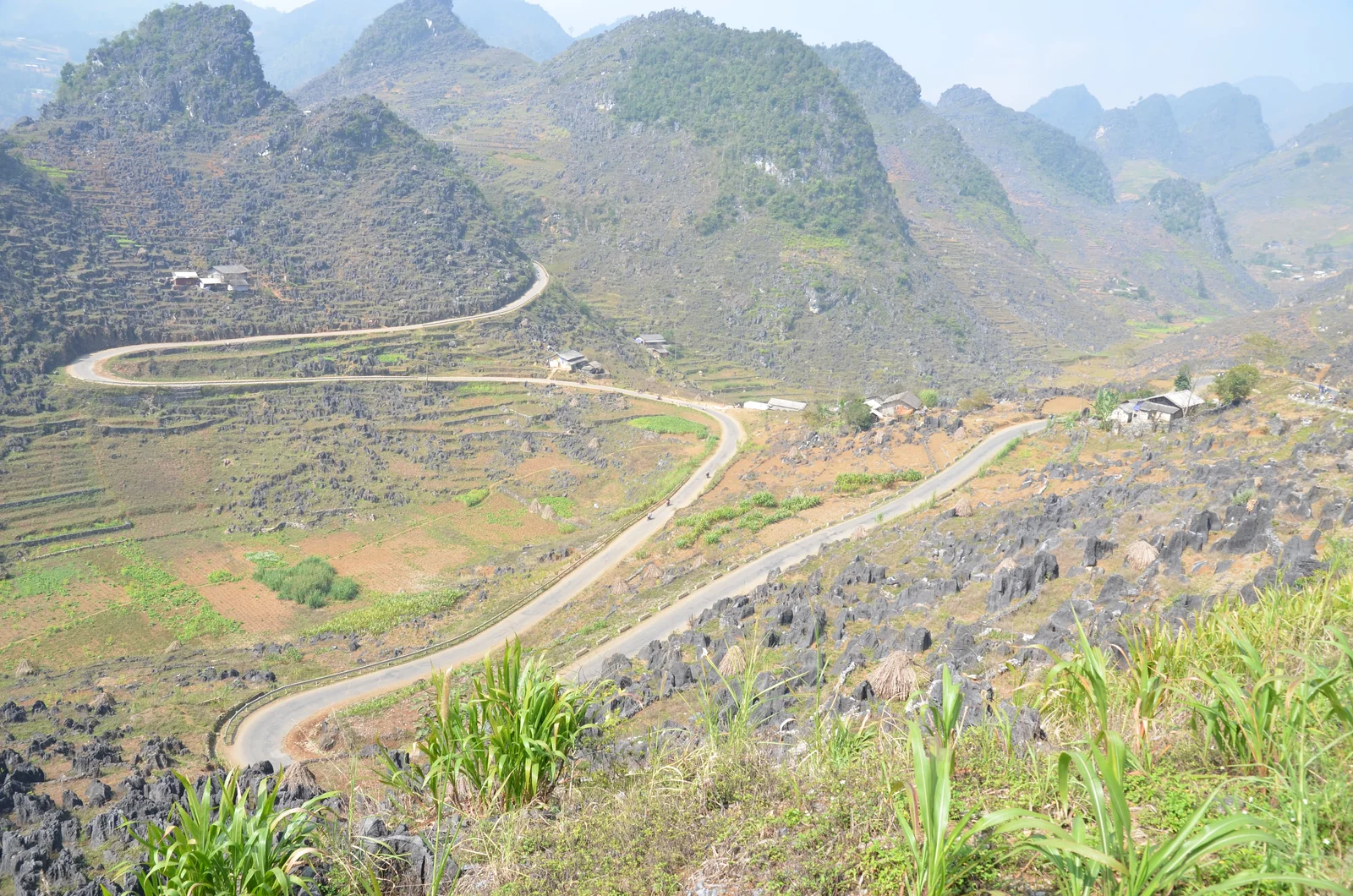

HA GIANG, Vietnam — January on the Dong Van Karst Plateau is a month of dramatic contrasts. With the autumn tourist crowds long gone and the buckwheat flower festival wrapped up, Northern Vietnam’s most celebrated mountain loop settles into its rawest, most atmospheric season.
For travelers seeking brooding limestone peaks, rolling seas of winter clouds, and authentic ethnic village life without tour bus traffic, January is a hidden gem. But underestimating the highland winter weather can quickly turn an epic adventure into a freezing ordeal. Here is the complete, practical guide to experiencing Ha Giang during the coldest month of the year.
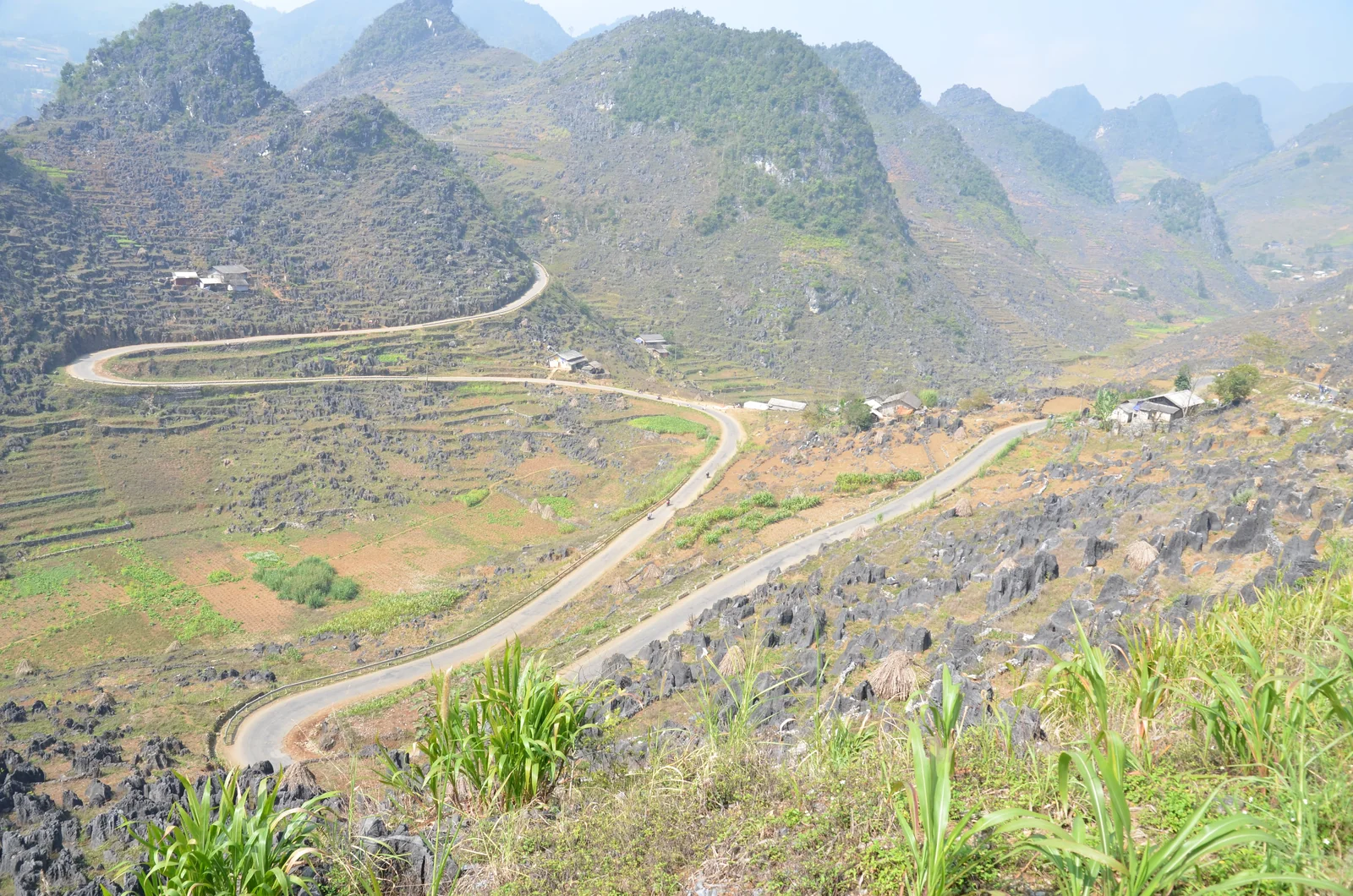
The mountain highway curving gently through a dramatic stone valley of jagged karst formations and terraced plots on the Dong Van Karst Plateau.
1. Winter Realities: Highland Solitude vs. Mountain Chill
- What Makes January Special: Pristine tranquility. The popular pass viewpoints and Dong Van Old Quarter are blessedly empty. Low cloud inversions drift between jagged limestone pinnacles like an ancient ink-wash painting. Patches of bright yellow mustard flowers (hoa cải vàng) begin carpeting the stone crevices, while the Nho Quế River reaches its clearest, most intense emerald-green hue of the entire year.
- The Highland Cold: Mountain weather in January is relentless. While midday can reach 15°C (59°F) under rare winter sun, early mornings and nights regularly plunge to 5°C–8°C (41°F–46°F), with high-altitude passes like Lung Cu and Ma Pi Leng dipping toward near-freezing. Cruising at 40 km/h on a motorbike creates a fierce wind chill that cuts straight through standard jackets.
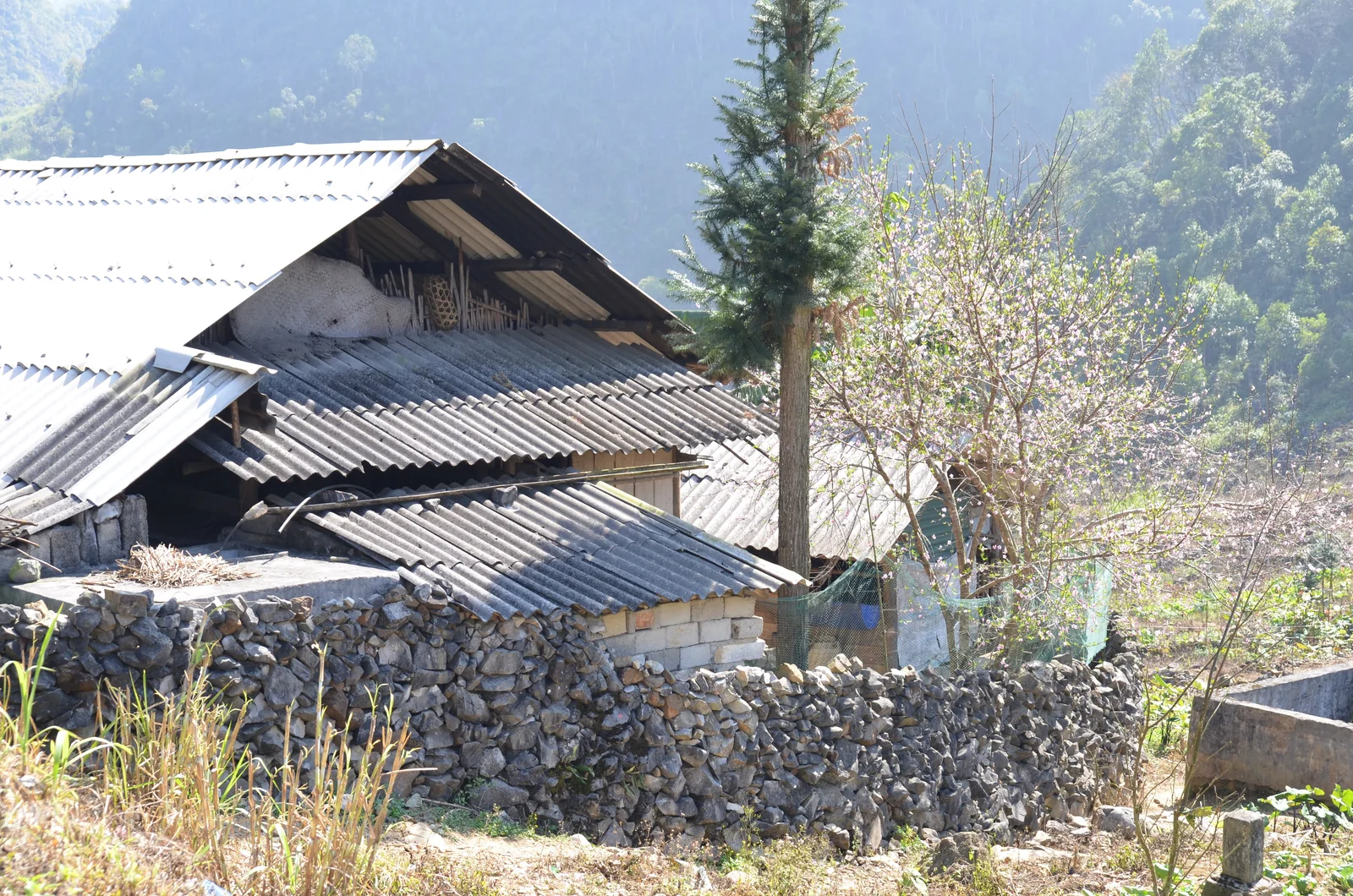
A peaceful village scene: traditional hand-stacked limestone walls (hàng rào đá) enclosing a rustic homestead with wild peach trees beginning their winter bloom.
2. January Weather: What to Expect Day-by-Day
| Metric | Typical January Conditions |
|---|---|
| Daytime Temperature | 12°C – 16°C (54°F – 61°F) |
| Nighttime Temperature | 5°C – 8°C (41°F – 46°F) |
| Rainfall | Very low (Dry season, but frequent light drizzle/mist) |
| Visibility | Dense morning fog until 8:30 AM; clearer afternoons |
| Road Conditions | Mostly dry tarmac; damp/slippery sections in high fog passes |
Unlike the wet monsoon of July and August, January is technically the dry season. You rarely encounter heavy tropical downpours. Instead, the weather is characterized by “mưa phùn” (freezing highland mist) and dramatic temperature swings between shaded valleys and sun-drenched ridges.
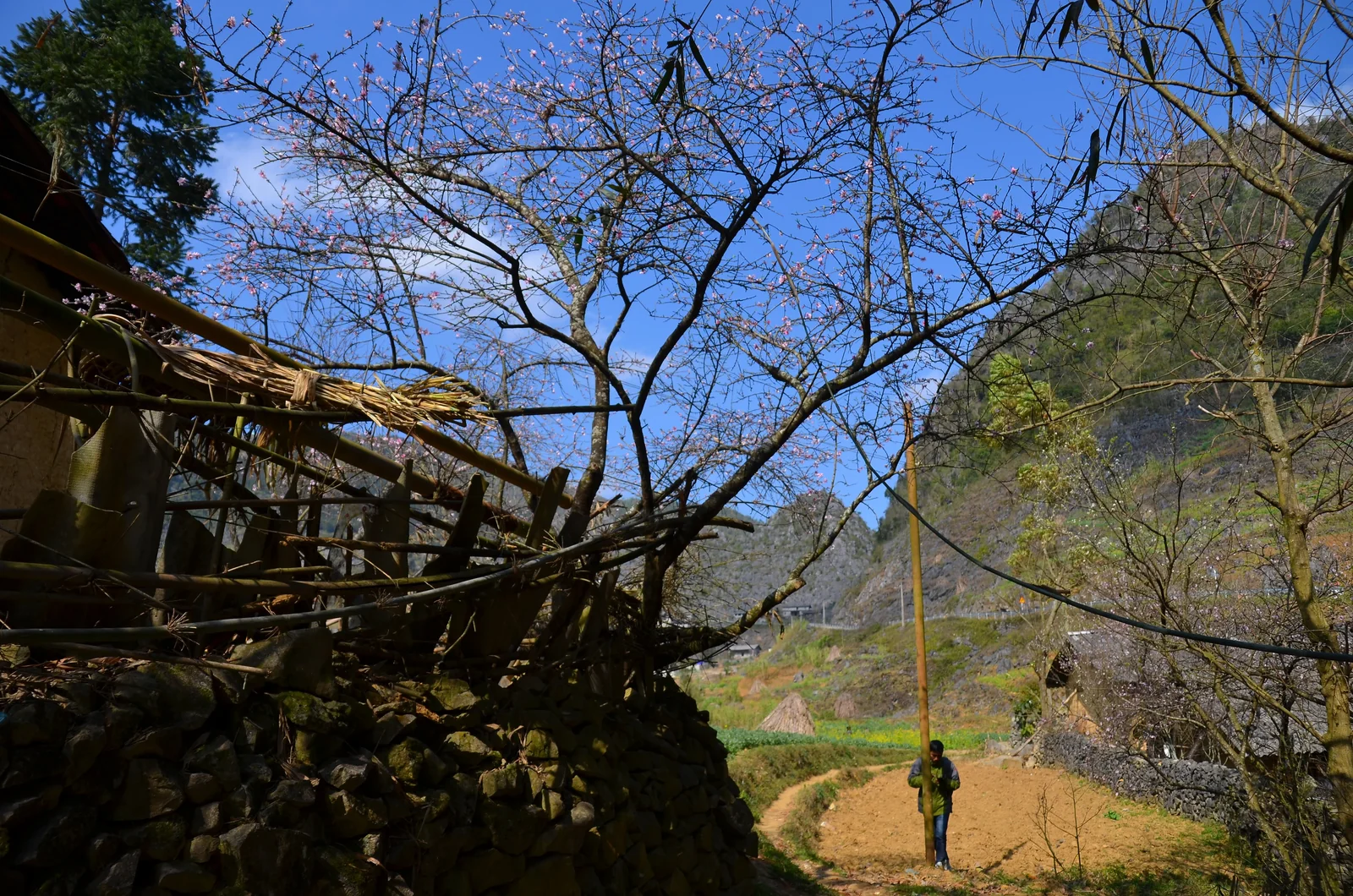
Early pink peach blossoms (hoa đào phai) arching above an authentic rock-and-bamboo garden fence, heralding the approach of the Lunar New Year.
3. What Blooms and Grows in January?
Travelers often worry that visiting after the buckwheat flower season leaves the landscape barren. In fact, January introduces a completely different, vibrant botanical palette:
- Yellow Mustard Flower Carpets (Hoa Cải Vàng): Bright golden mustard plots planted beside earthen Hmong homesteads in Sung La, Pho Cao, and Dong Van burst into vibrant bloom, creating a stark visual contrast against gray stone fences.
- Ethnic Farming in the Karst Crevices: Witnessing the famous “rock-pocket agriculture” (thổ canh hốc đá)—where resilient villagers cultivate cabbages, corn, and greens directly in natural soil pockets between razor-sharp karst rocks.
- Early Peach, Plum & Red Silk-Cotton Blooms: Late January welcomes white plum blossoms (hoa mận trắng) and the first fiery red flowers of the towering silk-cotton tree (hoa gạo), signalling the end of deep winter.
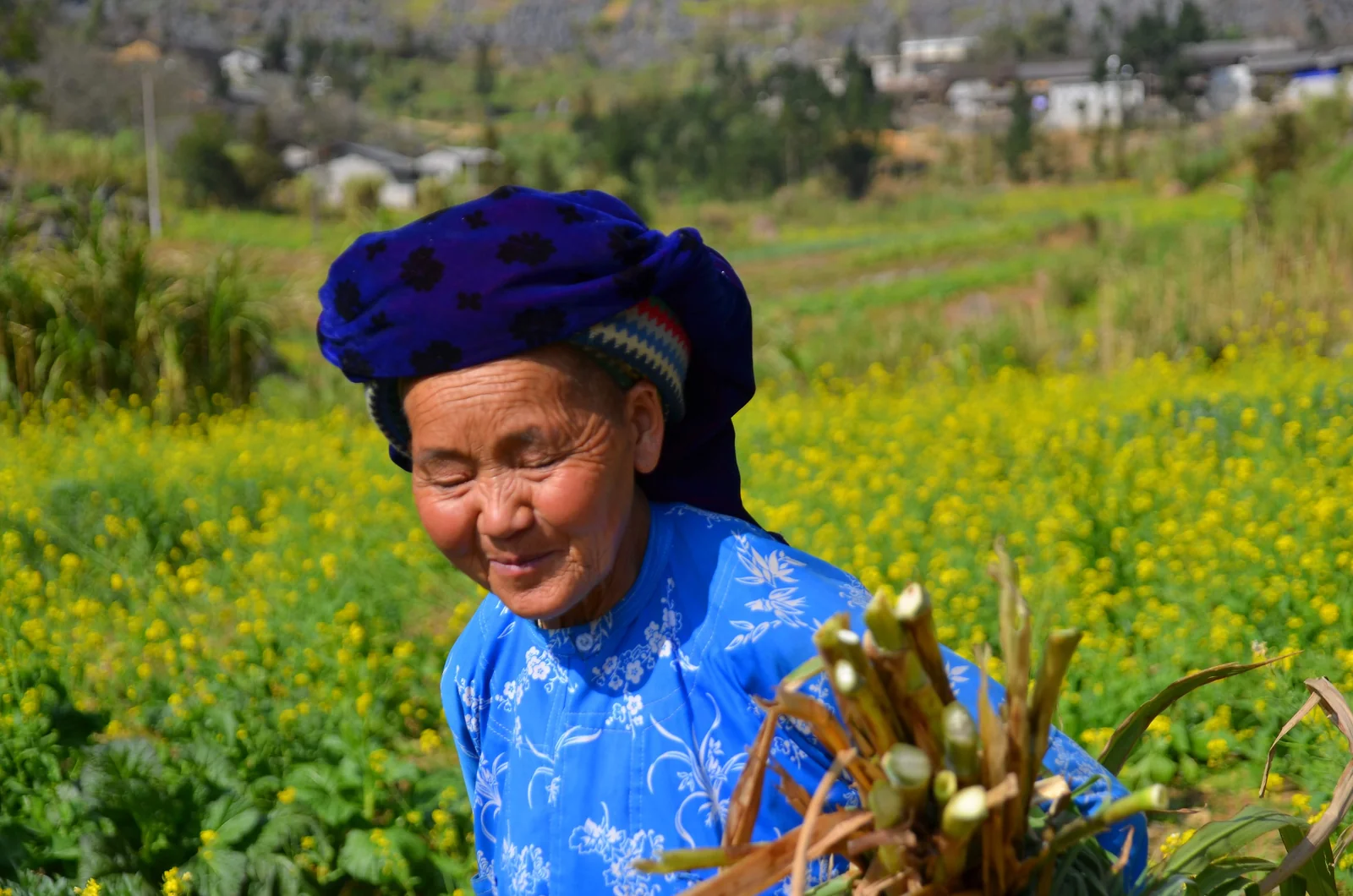
An ethnic minority grandmother wearing a vibrant blue headscarf and patterned tunic, gathering harvest amidst a golden carpet of blooming mustard flowers.
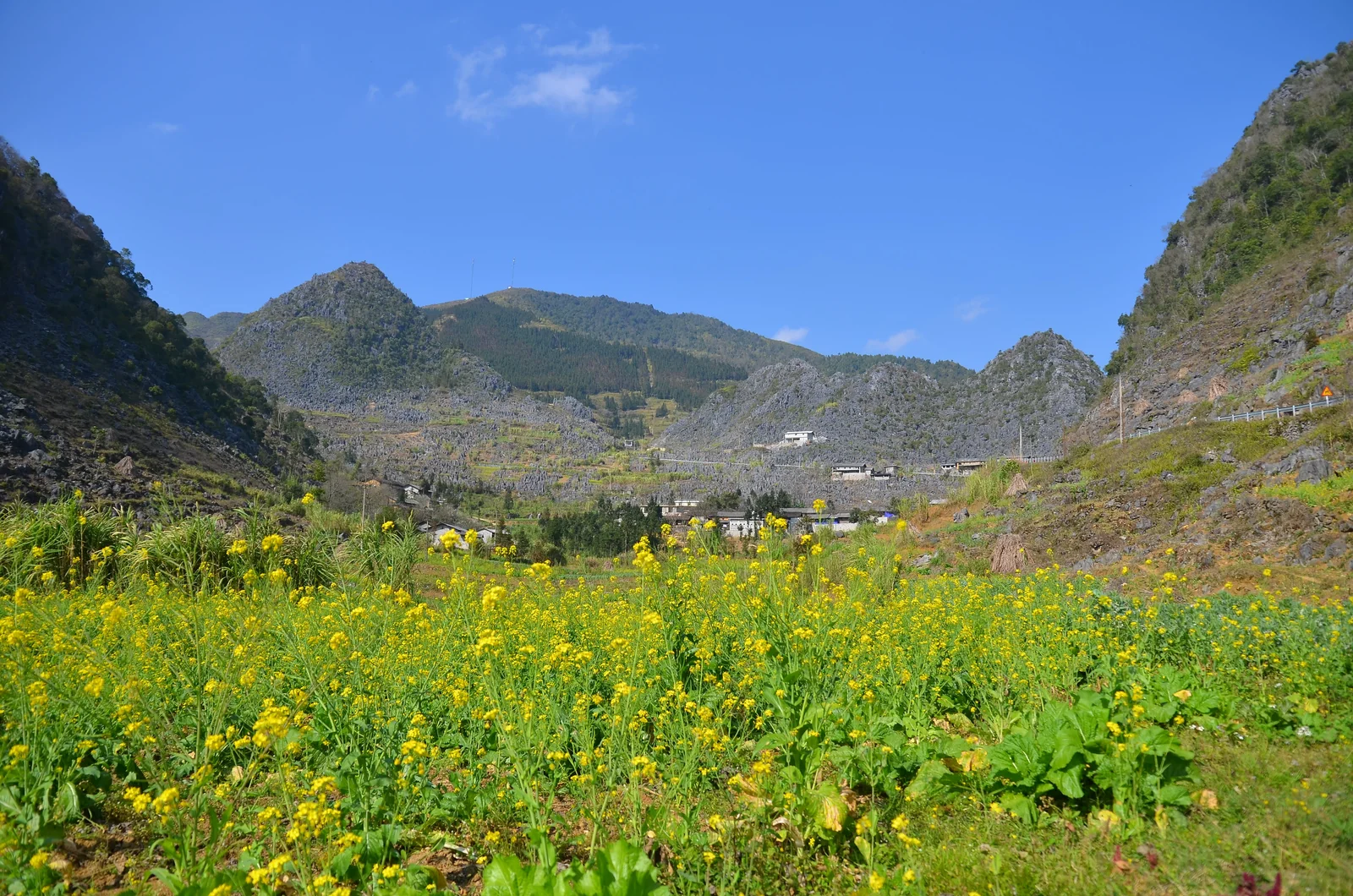
A luminous valley carpeted in yellow mustard blossoms under a crisp winter blue sky, framed by the rocky ramparts of the Dong Van Geopark.
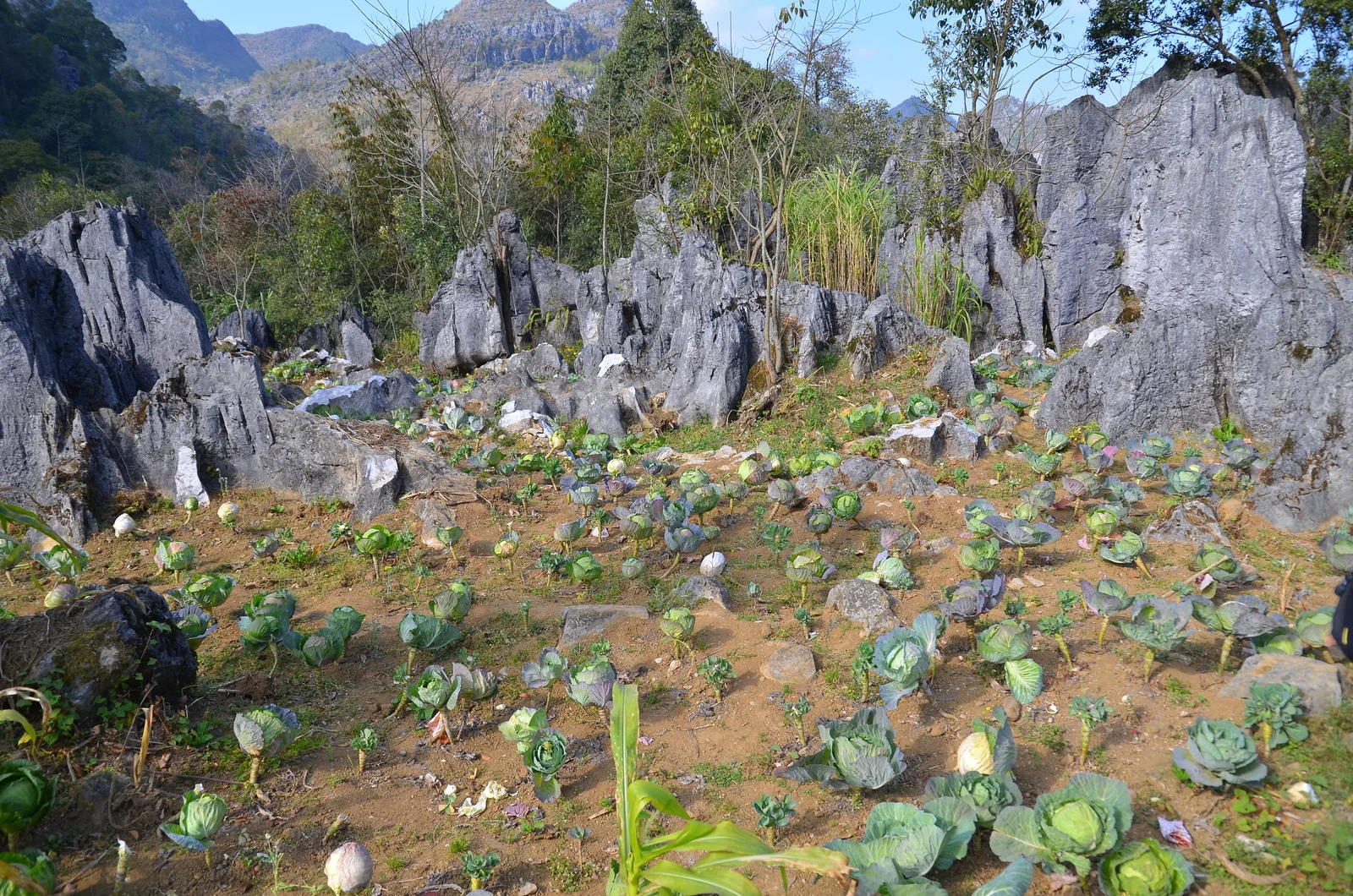
Ingenious “rock-pocket farming” (thổ canh hốc đá): hardy highland cabbages thriving directly between ancient limestone karst crevices.
4. Surviving and Thriving on the January Loop: 4 Key Rules
Rule 1: The “8:30 to 16:30” Driving Window
Never set off at the crack of dawn in January. Thick mountain fog often blankets the passes until 8:30 AM, cutting visibility to under 10 meters. Similarly, the sun drops behind the karst massifs quickly by 4:30 PM, and temperatures nosedive within minutes. Plan your daily riding strictly within this 8-hour window.
Rule 2: Multi-Layer Wind Protection
A single heavy winter coat is not enough. You need:
- A thermal base layer (Merino wool or synthetic heattech).
- A fleece or down mid-layer for insulation.
- A 100% windproof and waterproof outer shell.
- Crucial: Proper windproof gloves. Freezing numb fingers on a motorbike clutch are a serious safety hazard.
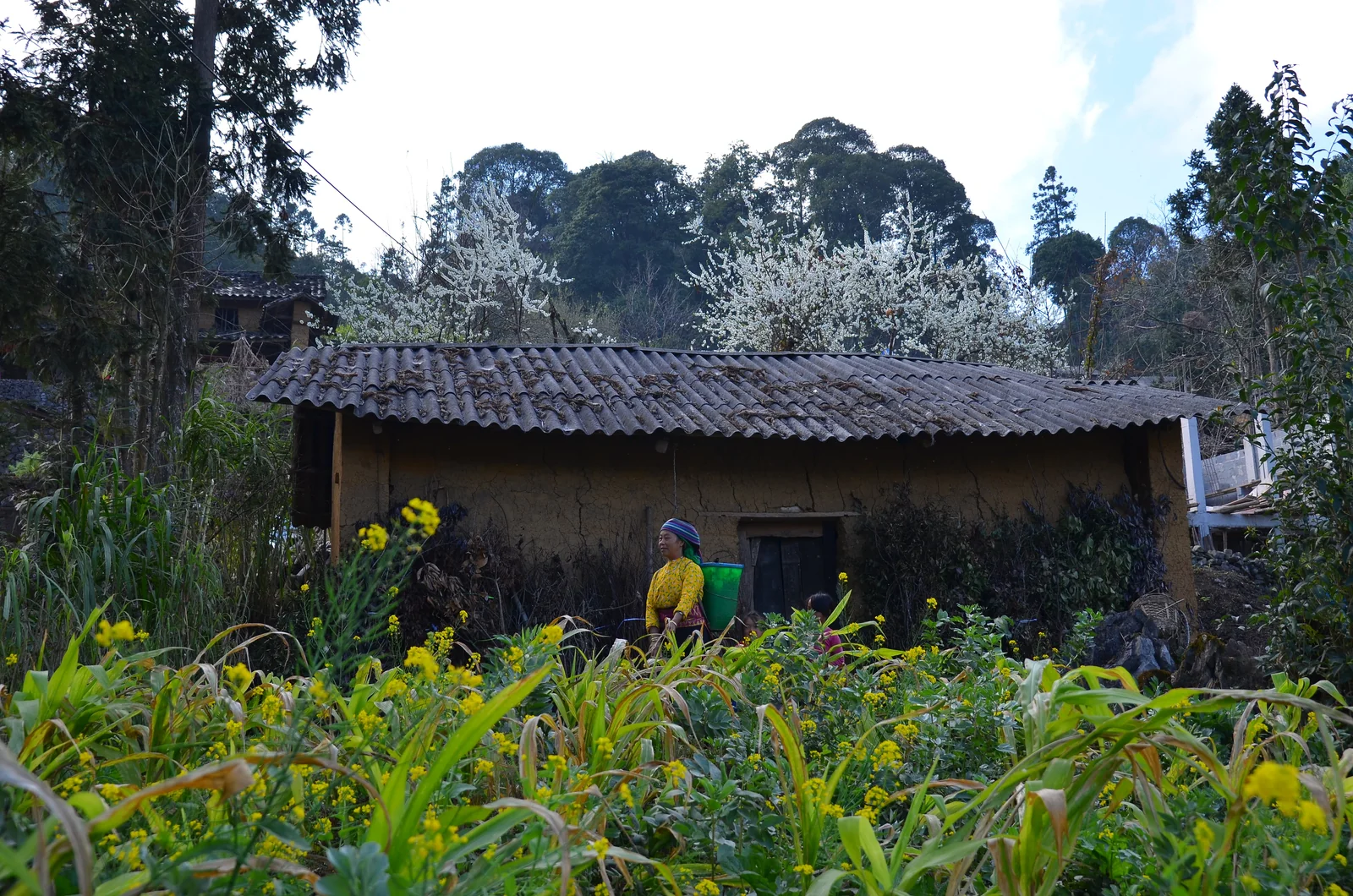
A classic H’mong earthen clay house (nhà trình tường) framed by golden mustard blossoms in the front garden and pure white plum flowers on the hillside.
Rule 3: Verify Homestay Heating
Traditional earthen houses (nhà trình tường) and budget homestays rarely have central heating. Look for homestays in Dong Van, Du Gia, or Meo Vac that provide electric heating blankets (chăn điện) or private rooms with air conditioning that doubles as a heater. Gathering around the family hearth fire (bếp lửa) with a bowl of hot thắng dền (sweet ginger rice balls) is one of the highlights of a winter trip.
Rule 4: Look for Spring’s First Messengers
Before winter bids farewell, high limestone ridges along the border reveal the first fiery crimson flowers of the wild red silk-cotton trees (hoa gạo), creating an unforgettable canopy against the cool mountain air.
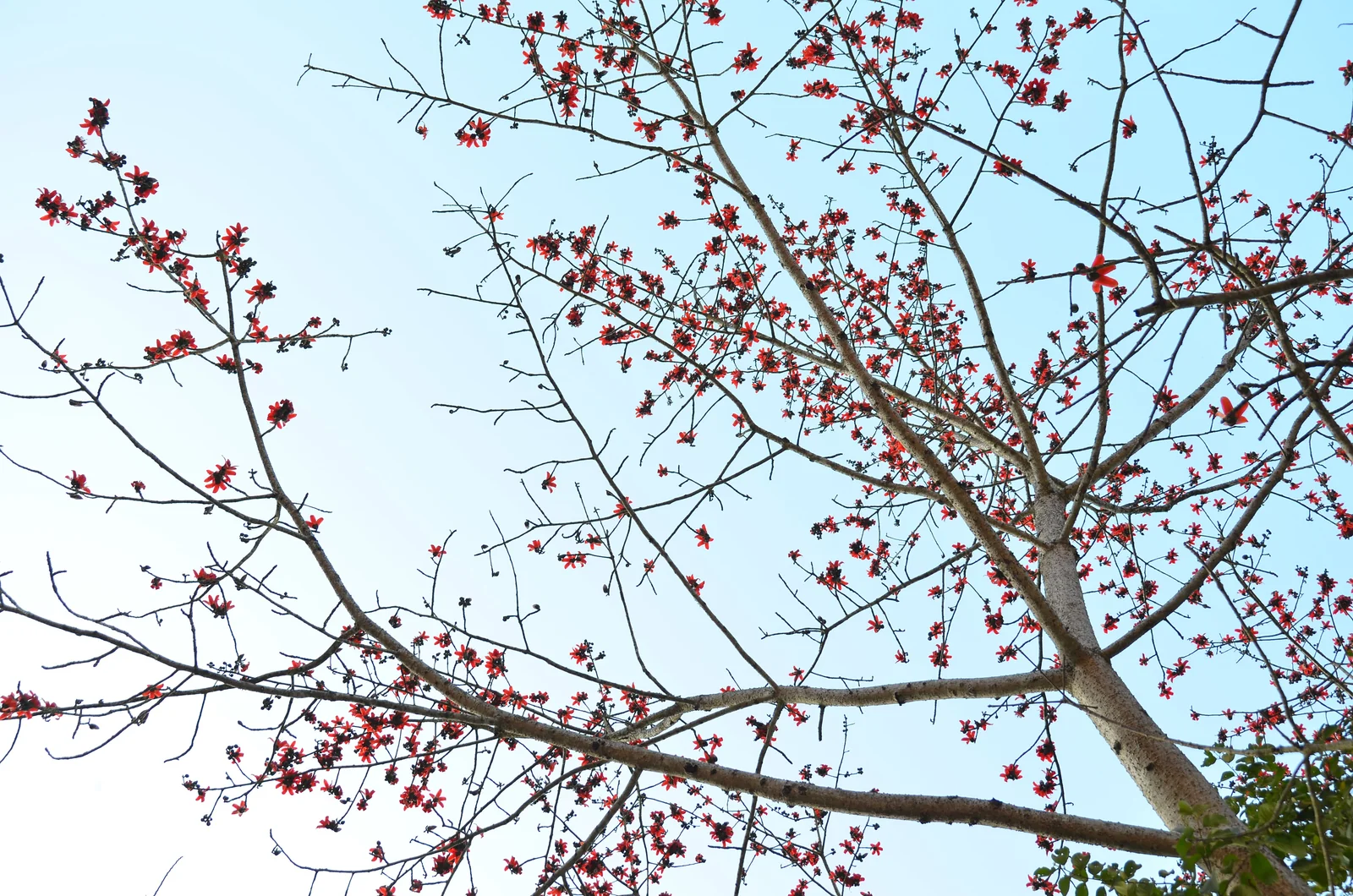
Fiery red blossoms of the wild silk-cotton tree (hoa gạo / hoa mộc miên) branching out across the pale sky, marking the transition from winter toward spring.
Key Information Summary
- Tags:
#HaGiang#HaGiangInJanuary#WinterInVietnam#YellowMustardBloom#DongVanPlateau#VietnamTravel - Best Window: January 5 – January 28 (Dry, cool, pre-Tet floral atmosphere)
- Average Temperature: 6°C – 15°C (43°F – 59°F)
- Highlights: Golden mustard blossoms, wild peach trees, rock-pocket agriculture, and cozy fireside homestays.